
Communion Before Prayer
The experience of prayer can often be complicated by answered prayer requests or a lack thereof. Genesis 18 reveals one foundational principle in understanding prayer. When this basis for prayer is laid it puts the understanding prayer into perspective. The chapter reads:
18 Then the Lord appeared to Abraham by the terebinth trees of Mamre…2 …behold, three men were standing by him…he ran from the tent door to meet them, and bowed himself to the ground, 3 and said, “My Lord, if I have now found favor in Your sight, do not pass on by Your servant. 4 Please let a little water be brought, and wash your feet… 5 5 "And I will bring a morsel of bread, that you may refresh your hearts. After that you may pass by, inasmuch as you have come to your servant." They said, "Do as you have said." (Paraphrased)
This story parallels the communion service, which tells the story of salvation and reveals the character of God. In John 13:3-5, Jesus celebrates Passover with His disciples. He girds Himself and begins to wash their feet. In John 13:14-16, Jesus teaches the disciples the importance of servant hood. Then He partakes of the bread with His disciples. If we understand the significance of communion with God, prayer makes a lot more sense.
Abraham expresses what goes on in the heart of God. He chases after the visitors. He goes to them and says, “If I have found favor in your sight, do not pass by your servant.” God sees Himself as the server. If we favor Him we will allow Him to serve us. Often times we wonder if God is unwilling to give, but the problem is not that God is unwilling to give, but that we are unwilling to receive. It is human nature to reject good gifts from strangers. Trust needs to be built before we are willing to receive free things from people we don’t know. God wants to know, do we favor Him in our sight? Do we trust Him? We think that by trusting, we are able to give, but first, God calls us to trust Him in order to receive.
Abraham says, “Let me bring just a little bread,” but he goes and gets the butter, the milk, and the calf. So many times, we get things advertised to us, and when we get it, it turns out a lot worse than it seemed. Hardly ever do you get something to be better than what you expected it to be. But with Jesus, He says, let me bring you a little morsel of bread, let me bring you a little water to wash your feet. But then He brings a cow with milk and butter. Only God gives more than He promises. Such is salvation.
As humans we don’t want to take things we don’t deserve because we think that implies weakness; we don’t like owing others or inconveniencing people. But if we don’t put Jesus in discomfort we can’t go to heaven, because the reality is that we are sinners. We have already placed Jesus at a discomfort. It is impossible for us to get to heaven without Jesus dying on the cross, and that’s why there is no condemnation, because Jesus paid the price.
The foundational principle and experience in prayer is to reflect upon and accept salvation, to acknowledge God as our Savior, and to realize He loves us more than life itself. In the experience of salvation comes the fear of God, humility, peace, a desire to avoid sin, joy, etc. The rest of prayer becomes a lot more stable when salvation is experienced. Notice what happens after communion has been experienced between God and Abraham.
God reveals to Abraham that He is going to destroy Sodom and Gomorrah and Abraham begins to intercede and pray to God. As you read through Genesis 18:22-33, count how many times God answers no to Abraham. You will notice that Abraham stops asking before God stops answering. I want to focus on Abraham’s attitude; he trusts that God will hear him so he asks with all his might. Abraham says, “I will ask one last time” (Gen 18:32) and then he stops. When Abraham stops, God stops.
The communion experience between Abraham and God set the tone for the prayer that took place on behalf of Sodom and Gomorrah. John 15:7 says, “If you abide in Me, and My words abide in you, you will ask what you desire, and it shall be done for you.” When salvation makes sense, when we have experienced communion with God, prayer will become powerful.
May we experience Christ in a rich way each day.
_________
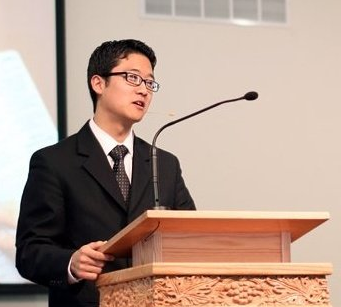 Pastor Roy Kim is a graduate of Andrews University.