
Covid-19 and Its Impact on the Church
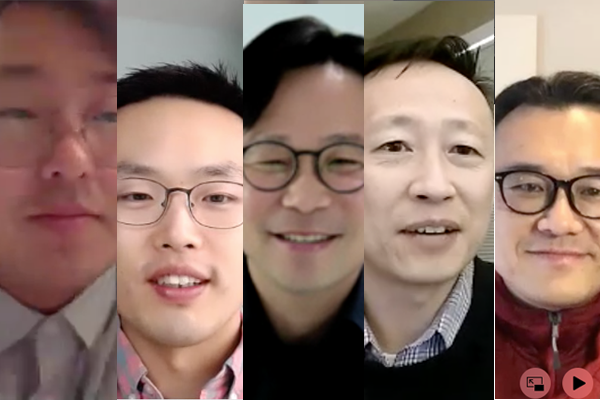
When the news of the Corona virus affecting the people of Wuhan, China was raised in the early months of 2020, no one saw how widespread and terrible the impact of the virus would be to the world. One significant way that the pandemic has impacted our SDA community is in the way we have our church services and fellowship. In order to get a pulse on the impact of the virus on our churches, I had a Zoom interview with several pastors.
I had the privilege of interviewing Pastor Youngki Chang from Eldasom Church in Loma Linda, California, Pastor Jay Cheong from Central New Jersey Church in Edison, New Jersey, Pastor David Kim from Good Hope Church in Spencerville, Maryland, Pastor Jimmy Kim from Marietta Church in Marietta, Georgia and Pastor Beett Kwon from Lombard Church, Illinois. (You can hear the full interview in our Media page)
How the churches are handling worship services in Covid-19 era?
Pastor David Kim found out quickly that doing worship online was not the same as doing in-person services. He realized that he needed more ways to engage the church members compared to when meeting in person, that he needed more active participation from his church members. The Good Hope Church started instituting a time of “family feature” where one particular family was front and center for the week, introducing themselves and speaking for a few minutes about what has been going on in their lives. Pastor Kim reported that his parishioners responded very favorably to this new feature as it gives people in the church another means to connect in a meaningful way.
Another meaningful adjustment that Pastor David made was to shorten his sermons. He realized that his church members needed more focused sermons because he saw that many families with children with shorter attention spans were watching, so he made allowances for that. But he added more points of connection by asking his church family to type in their prayer requests and praises. Pastor David felt he needed to make his adjustments because “spirituality doesn’t happen when you sit in front of a laptop to listen to a sermon.”
Pastor Jay Cheong has also made his services more inclusive of his church members’ input. During the week, the church members contribute children’s stories and prayer which are pre-recorded and Pastor Cheong edits and plays them during the service. Working on these videos had the added benefit of making Pastor Cheong hone his editing skills.
Evidently, God had been preparing the Lombard Church for online ministry in many ways. Since Pastor Beett Kwon is still working on his doctorate from Andrews and the Lombard Church is two hours away, many of his Bible studies and even board meetings were done online even before the shutdown. Also providentially, they had just set up online giving a few months before the church was shut down.
The Lombard Church also made some pointed changes to the way they did their services. They decided to shuffle some things around to accommodate the different age groups. They have decided to dedicate Sabbath mornings to children’s Sabbath School and have adult Sabbath School on Friday evenings.
Pastor Kwon debated whether to adjust his sermons when things went online. Ultimately, he felt impressed to keep his sermons the length that he was used to giving during in-person services. He was convicted that he didn’t want to compete with other more “entertaining” media content on the internet. He felt that his congregation needed the “meat” of in-depth Bible study that he incorporates into his sermons and that his congregation needed the challenge of getting deeper into the Word more than ever.
The Marietta Church has recently been blessed doing chapter by chapter study of Galatians and Romans and they also have been working on accountability for personal and spiritual growth together which has been great for them. Using a small group Bible study format worked much better for the Marietta Church on Zoom where Pastor Jimmy Kim worked more as facilitator compared to the preaching, that he used to do during in-person services.
Are there silver linings of online worship?
Having online services meant that Pastor Jay Cheong could invite speakers from all over the world to lead out their services. Another positive aspect of the pandemic was that it forced him to refocus on different age groups from pre-Covid ministry time. That is, before the pandemic, his focus was on children’s ministry but after Covid, he had more opportunities to minister to the adult EM. These EM adults tended to be the supporters, the leaders and teachers of the children’s programs, so they were always busy, but the pandemic provided an opportunity to connect more deeply and focus on their own spiritual growth as a group.
For Pastor David Kim, a bonus about these pandemic times was that having Zoom provided a great way for the church to welcome new babies that were born into the church during lockdown. And that it was a natural way to share other good things that were happening in the church members’ lives.
Pastor Jimmy Kim, along with all the other pastors interviewed, said that it was a blessing to have many people join their services online that normally wouldn’t have joined an in-person service. Some of the online participants were former church members who went off to school or work, and some other “guests” were people from different parts of the country.
Struggles of ministry during pandemic:
Pastor David, like most of the pastors interviewed, admitted to struggling to know how to do ministry during Covid-19 pandemic, especially in the beginning. It was a time for deep prayer and contemplating what “church” meant for people. He came to the realization that you can have church without a building, but you can’t have church without connection.
He found it challenging to connect with his church members, especially in the beginning. One demographic he found especially difficult to connect with online were the young adults. He posited that because they are so technically savvy, that the specific thing that they were craving was personal connection which they were not getting from on-line services. He added that for young adults, he saw fear and extended pandemic resolution, translate into anxiety for their careers.
Pastor Jimmy Kim struggled connecting with his audience online, especially when speaking to blank screens. He at least needed to see faces to get reactions and feel more connected with his church members. He had to specifically ask his church members to open up their cameras so at least he can see some faces.
Pastor Beett Kwon found it difficult to gauge how his messages were being received and how his church members were connecting with his messages and with God. Pastor Kwon echoed those sentiments that it was harder for younger people from his congregation to be engaged in Lombard's services. But Pastor Kwon also thought that perhaps that was not entirely the fault of the young people and that the church has not really tailored the services for young people, instead gearing it more for the adult audience.
Ministry innovations:
Grow groups:
For Pastor Youngki Chang of Eldasom Church (Korean ministry for 1-60 in Loma Linda Church), the shutdown was very challenging and he really wrestled with God in knowing how to lead his church. But in September, God gave him an idea that has been really successful in his church. He developed the idea of “grow groups” in his church. Pastor Chang sent out surveys to all his church members and asked them to list what their interests, hobbies, goals, etc. The answers ran the gamut of interests—cooking, child rearing, sports, book club, pet care, Bible study—were some of the interests that the groups were formed around. Each group chose a leader and they are running independently. Each group lasted for 6 weeks, then would have a few weeks break and then would have another session, and so on. The beauty of this grow group idea was that it was a vehicle to invite friends from outside the church. Even internally, it was a way to get to know church members better than they had, even before the pandemic. Thirty groups were created with eighty people participating.
And while the groups were focused on different interests, the ultimate goal of all the grow groups was to lead to Bible study. Presently, there is a group of 8 young people that are studying the Bible together through the grow group. Pastor Chang is very thankful to God that the pandemic provided a chance to implement this idea that he had been mulling over but was never able to execute until Covid-19.
Online communion:
Pastor Beett Kwon introduced online communion service to his church during the pandemic. He sent recipes to make communion bread to all the families and encouraged the children to work with their parents. This would provide a rich opportunity for parents to explain aspects of the communion. Pastor Kwon admitted to being a bit hesitant to have this online communion service because it seemed sacrilegious somehow but as he thought about it, he realized that it was quite Biblical to do it at home. During the very first communion, or Passover, it was the father of the house who was the priest and everyone ate their unleavened bread and wine in their own homes. Doing it this way, provided the communion service to be seen from a whole new and different perspective. It has been very well received by his church.
On-line VBS:
At the Marietta Church, VBS was a very anticipated event in Pastor Jimmy's community, where they used the opportunity to minister and support lower income families. Since they couldn’t have VBS in person, they made packets of school supplies and dropped it off at the homes. They had a 3 hour Zoom time, where the children participated in crafts and Bible story time. It was very successful and they will probably have another similar event in the Spring.
Children’s Sunday program:
Although not interviewed for this article, Pastor Christian Chung who is the interim “Zoom” pastor of Dallas Fort Worth Church, leads the children’s program on Sunday mornings. A very interactive time is had, as each child is asked to make slides that show their takeaway from the previous lesson. Having the meeting on Sunday morning allows the children to have a dedicated time to themselves for spiritual growth and connection with each other.
Community service:
At the Good Hope Church, Pastor David and his church were blessed to have been partnering with the Maryland Emergency Services and the Red Cross, to be a collection/pick up center for PPE equipment. They received supplies of gloves, masks, cleaning supplies and they gave to institutions such as day care centers who were badly in need of PPE equipment. Even though there was no physical contact, this was a wonderful opportunity to “touch” their neighbors in service to their home community.
What will the church look like post-Covid?
Pastor Kwon said this pandemic made him realize that the church needs to be more relevant and in touch with their community. Furthermore, he said that the church needs to get feedback from different generations and utilize their input to make the services more genuine to them.
Pastor Cheong thought that this pandemic has highlighted the need for every church to make their online worship services available for everyone, and to make them good quality in terms of execution and message.
Pastor David Kim thought each church and the Seventh-day Adventist Church as a whole, were successful on using this unfortunate period in contemplating their mission and the way they do ministry, because there was never a time when the churches were so uncomfortable. Seeing things from a new and different perspective is God’s way of shaking us out of being complacent. He thought that praying for ideas on how to broaden the church’s reach, is the mission of each church post-Covid.
How did Covid-19 affect people’s faith? What spiritual patterns were seen?
Pastor Beett Kwon was surprised how spiritual numb people can become. When the pandemic first started, he saw people being shaken out of their normalcy and being more interested in prophecy and spiritual matters. But in a surprising short amount of time, those feelings quickly faded. He realized that people can’t wait for signs of the end times to make them change their habits and their faith walk, they need to have a daily commitment to surrender themselves to God. The signs that we are seeing through the Covid crisis should serve to wake us up and give us warning, but we should not depend on events to propel us to be more faithful.
Pastor Youngki Chang remarked that we can’t depend on feelings and emotions to perform ministry. Even before the pandemic, it was easy to have feelings of being let down and burnout in service. What was needed was a close walk with God, that is independent of circumstances.
Conclusion:
Despite the vast changes that have taken place in our churches during the pandemic, we can see how God was working through these times and that there are many silver linings during the lockdown. However, this is not a time to be lulled into complacency, the pandemic serves to show us that the time is short. The Covid-19 pandemic has shown us in a microcosm what the end-time events might look like. We can see how people were so shaken out of their regular routines but quickly settled down to a “new normal.” We pray for wisdom to share the love of Jesus in meaningful ways, that show a dying world that there is no need for fear and anxiety, even during pandemics.