
Heart of Worship: The Story of David and the Ark
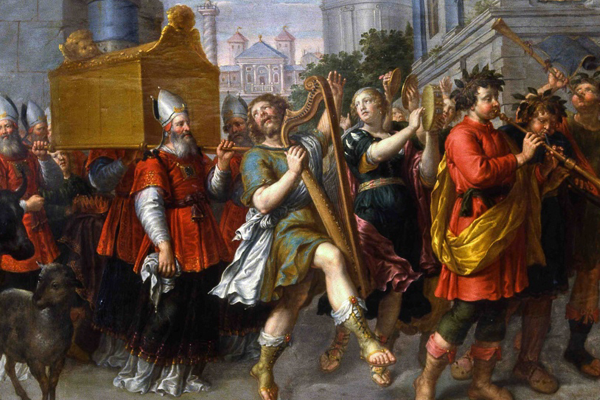
When we don’t know God or have the wrong picture of him, some of the stories in the Bible make God look very scary, arbitrary, unfair and exacting. As in any relationship, the more we have experiences we have with someone, we have a bigger knowledge base to assess their character. So, as we get to know God by looking deeply into the stories, we can get a clearer picture of who He really is.
The story of David bringing back the ark from Abinadab’s house is a story that makes you question God’s character. In fact, many atheists point to this story and say that they will never believe in a God such as one seen in this story. This story takes place in the early reign of David. He has successfully united Israel and Judah under his kingship. He establishes his Jerusalem as his base as he overthrows a seemingly impenetrable city, Jebus. He puts down the Philistine uprising successfully and is acknowledged by surrounding nations, even the King of Tyre sends him gifts to build his house. He adds to his number of wives, “After he left Hebron, David took more concubines and wives in Jerusalem, and more sons and daughters were born to him.” 2 Sam 5:13 So, at this time in this life, things are going well for David after years of being a fugitive and hiding from Saul in caves. Please note that these things that are happening in his life are successes as seen by those in the world, but are not necessarily things that bring him closer to God.
The idea of bringing back the ark seems to start at one of David’s celebrations. According to 1 Chronicles 13, there were three days of eating and drinking to celebrate David taking the throne. “David conferred with each of his officers, the commanders of thousands and commanders of hundreds. He then said to the whole assembly of Israel, ‘If it seems good to you and if it is the will of the Lord our God, let us send word far and wide to the rest of our people throughout the territories of Israel, and also to the priests and Levites who are with them in their towns and pasturelands, to come and join us.’”1 Chron 13:1-2.
It seems that the idea of bringing back the ark did not originate from a contemplative, prayerful, sanctified thought but from a boisterous party. 1 Chron 12:39 “The men spent three days there with David, eating and drinking, for their families had supplied provisions for them.” There is other evidence that points to the fact that David did not bring the ark back in a sanctified manner. Let’s read how the ark was transported:
“They set the ark of God on a new cart and brought it from the house of Abinadab, which was on the hill. Uzzah and Ahio, the sons of Abinadab, were guiding the new cart, bringing with it the ark of God. And Ahio was walking in front of the ark.” 2 Samuel 6:3-4
What is wrong with this picture?
In Exodus 26, God gives specific directions on how to transport the ark. “Insert the poles into the rings on the sides of the ark to carry it. The poles are to remain in the rings of this ark; they are not to be removed.” Exodus 26:14,15. Furthermore, the ark was not supposed to be put on a cart at all. And the Levites carried the ark of God with the poles on their shoulders, as Moses had commanded in accordance with the word of the LORD. 1 Chron 15:15. The ark should have been carried by Levites by the poles on the ark. Then why was this method not used?
The Philistines had captured the ark decades previously and brought it home like it was a piece of loot. But the ark proved to bring all kinds of misfortune on them- disease and pestilence. Then the Philistines decided to get rid of the ark but didn’t know how. They researched on this matter by consulting their heathen priests and sorcerers. They were advised to put it in a brand new cart driven by two calved cows that have never been yoked. The cows brought the ark to Israelite territory where it remained for 20 years at the house of Abinadab. 1 Samuel 7:2.
David seems to have consulted the sons of Abinadab on how they got the Ark from the Philistines. The house of Abinadab seemed to have received the Lord’s blessings, and David wanted the same blessings. So why not consult the “experts?” That was the obvious and the easy thing to do according to the ways of the world. However, David was a prophet of God. He should have prayed for God’s counsel and searched the scriptures to know God’s will concerning the proper mode of transportation for the ark.
Instead, by relying on the sons of Abinadab, he indirectly relied on pagan sorcerers to transport the holy ark of God. Imagine if the General Conference wanted to have a camp meeting and they relied on the psychics and new age mediums to come up with the program? How offensive would that be to God?
However, David was too blinded by his selfishness to see all this. David gathers together “all the chosen men of Israel, thirty thousand” 2 Sam 6:1 to bring up the ark. They set the ark of the covenant on a new cart and have the cows bring it back to Jerusalem. During this journey, David and his people played all kinds of instruments. Just imagine all the time and effort that went into planning for this worship service? How holy and imposing it must have looked on the outset! But who was at the center of it? Who was receiving the honor and glory?
The time of celebration is brought abruptly to a halt when Uzzah, one of Abinadab’s sons is struck by God for trying to right the ark when the cows stumbled and shook the ark. For David, this was a great embarrassment. This was supposed to be a celebratory, victorious moment but it ended up being tragic and sobering. I’m sure that everyone went home feeling defeated and disappointed.
David was filled with consternation and dismay. He must have reasoned as many people do when they read this story, why is God doing this? I am bringing the ark to its rightful place. Shouldn’t God be rewarding me and not punishing me?
David was so blinded by his selfish desire to receive God’s blessing, that he completely ignored the heart of the One who gives that blessing. As a prophet of God, David’s job was to alert others of God’s will and His heart. So in this context, David’s sin was far greater than that of Uzzah who was a farmer not familiar with the ways of God.
I believe that this incident can be a reflection of how we, even today, act toward God. We want to worship God on our own terms and make our own way. We have a vague idea of worshipping God, and that we think that we are doing God a big favor in worshipping Him. We bring what we want to bring - music, gathering of people, a celebratory mood. On the outside, it may look like there is worshipping and praise but God sees the heart. Are we merely seeking the blessings of God while ignoring the heart of the One that wants to bless us?
Like David, we want to put God “in a box” and take it out when it is convenient for us or serves some purpose. When we have a pressing need, we pray to God for deliverance. And we put the trappings of what seems like the right things in order for us to feel like we are worshipping God. We pray in Jesus’ name, and there is a form of religion. But, many times, it is only an illusion,” having a form of godliness but denying its power.” Tim 3:5
One of the most sobering and revealing aspects of this event is that David was totally convinced that he was being righteous, that he was doing good work for God. He was wrapped up in his own desires that he thought that he was doing good for God when he was fulfilling his own selfish desires. And even after Uzzah is struck, self was the center regarding the ark,...‘How shall the ark of the Lord come to me?’” 2 Samuel 6:9 His true heart is revealed when he says that the ark is coming to himself. It was really about making David look good, not making God look good. No wonder he got so angry.
In anger and resentment David brings the ark to Obed-Edom’s house, who was a Philistine(Gittite). Then David goes home.
But shortly thereafter, David heard some interesting news about the ark. That while it was at the house of Obed-Edom, his house was abundantly blessed. In fact, Obed-Edom was so undeniably and supernaturally blessed of God that the rumors of his blessings made it to David in three short months when there was no internet news or SNS to spread it.
When David heard about how much Obed-Edom was getting blessed, he realized that the ark is a source of blessings and decided to bring it back again. Even at this point in time, David’s motivations may not be that pure.
But something was different about David when he brought the ark back from Obed-Edom’s house. This time, he wore a linen ephod. I imagine that the first time, he wore his kingly robes, a sign of his status and wealth. In Patriarchs and Prophets, EGWhite wrote, “The king had laid aside his royal robes and had attired himself in a plain linen ephod, such as worn by priests...But in his this holy service he would take his place as, before God, on an equality with his subjects. Upon that day Jehovah was to be adored. He was to be the sole object of reverence.” p. 707
But the crucial difference was that he offered up sacrifices every six steps. Giving the sacrifices pointed David to the Messiah, the “lamb slain from the foundation of the earth”. He was reminded that he was not doing God a favor by bringing the ark back home, rather that God was giving David His favor at the cost of His own life. This recognition changed David’s whole heart - from a selfish desire for the blessings to a selfless desire for His glory.
David “danced with all his might before the LORD,” 2 Sam 2:14. When David realized that God’s infinite mercy brought salvation to all sinners like himself who have miserably failed to honor the Lord properly, he was filled with the Spirit of overflowing joy. He didn’t care about being kingly and majestic. He just wanted to praise God, even if he embarrassed himself in the process. David said, “I will celebrate before the LORD, and I will humiliate and humble myself even more than this.” 2 Samuel 6:21. With overflowing joy, he blessed others with gifts. ”Then he distributed to every man and woman among the multitude of Israel a loaf of bread, a date cake, and a raisin cake.” 2 Samuel 6:9.
It is a principle of God that beholding Jesus makes the person a fountain of blessing. “Love for Jesus will lead us to work as He worked for the blessing and uplifting of all people. His love will lead us to be kind and loving. We will feel sympathy for all the creatures of our heavenly Father.” Steps to Christ, p 37.
Let’s join David in asking "Search me, O God, and know my heart: try me, and know my thoughts: And see if there be any wicked way in me, and lead me in the way everlasting.“ Psalm 139:23-24 David didn’t realize the wickedness in his heart until he repented before God. May we come before God in humility and repentance and worship God for who He is, because He is worthy of being praised.
May we put Him on the throne of our hearts and give Him the adoration and praise that He deserves. May we behold Jesus as the spotless son of God, the lamb that was slain from the foundations of the earth. When we do, we can be assured that the fountains of joy will spring forth where our deepest desire will be to praise and honor Him. The tide of blessings will flow from God to those around us and we will be made a channel for Him to work through. This is what the heart of worship is all about.
 Jane Chung is a member of the Westchester Korean SDA Church. She is married to Eric and has four children. Her passions are cooking, sewing, Bible study, lay leadership and spreading the gospel.