
Ministry & Industry
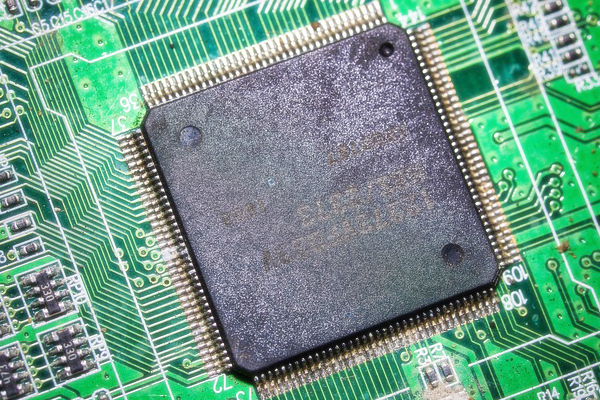
In my whole life, I don’t think there has been anything as exacting, grueling, or strenuous as electrical engineering. I really don’t mean to complain, or exaggerate, or even bathe myself in glory at having emerged in one piece after four years. This degree just took everything I could offer.
There were some memorable moments in my undergraduate career. In one of my circuits classes during my sophomore year, my friends and I would be in the computer lab until 4am multiple nights throughout the week, just to finish the required problem sets. We’d eat dinner between midnight and 1am, not having had a chance to eat before. Then at 4, sometimes 5am, we’d all wearily trudge out the lab and walk back to our dorms or drive home to catch maybe a few hours of sleep until class began in the morning.
Another memorable moment was my microprocessor class. It was basically a programming class in a very primitive language. Because of this class and my signals class, I was in the computer lab until around 4am every day, trying to solve problems, trying to get my programs to work. At the end of the semester, our final for this microprocessor class was to write yet another program that performs some useful functionality. We were given 24 hours to do it. I began the test Saturday evening at 6pm, and worked straight for 12 hours, slept at 6am, got up at 11am, and then worked again until 6pm. It took me 19 hours of scribbling, designing, pulling my hair out to get the program working, documented, and then turned in. In those 24 hours of what seemed like eternity, I didn’t know how I would get it done. There were moments of despair, but somehow, the prospect of finishing, the challenge set before me, made me rise to a level I had never before gone.
Last but not least, my senior project for this last semester involved creating a software that is able to classify instruments correctly. We had a month to do the project. My team and I for the last couple weeks met together, struggled together. We coded and coded, wrote and wrote, discussed, argued, planned, went back to the drawing board, consulted the TA’s, practiced and practiced, to make sure that our final product was top notch. And it was. It really was. The ridiculously late nights, the persistent effort, and the diligence all served its reward in the end.
The journey to my degree has put me in perpetual mood swings, caused depression, and even changed my personality. And I thought this impossibly demanding period in my life was over. Little did I know.
Now that I’ve started working in the industry, I see that the expectations for an electrical engineer are no less. I have been asked to do things that I have never before in my life thought I could do. My boss asks me questions that only an experienced engineer should know. I am already put in charge of a project. As for my co-workers, they are sharp, diligent, and punctual. I’ve been reprimanded for my mistakes, while at the same time, patiently taught. To compensate for my lack of experience, I know I have to work late hours and Sundays to get up to par. Without being told verbally, I simply know that this is what is expected of me. But so far it’s making me rise to a level I never could have imagined.
Why does the world demand so much more than Christians? If there’s a common thread in these experiences, it’s that my professors did not care how late we stayed up. They did not care that our bodies suffered from sleep deprivation and food. They did not care that we were stressed, or depressed. They simply handed out the assignment, and expected it to be finished – when it was supposed to be finished. My boss does not seem to care that I don’t know how to do certain things. He just expects me to figure it out and give him an answer. And yet to say that these challenges are simply my own experience would be extremely narrow-minded, for I have engineering friends working 12 hour days, including weekends. Others, lawyers, investment bankers, top off 100-hour weeks consistently. They don’t play games in industry.
But the gospel deserves no less. We need to wake up about what the gospel is. It isn’t volunteer work. It isn’t an extracurricular activity. It isn’t a club. It’s not something you put on your resume. It isn’t something you use to find your future husband or wife. It is a serious question of “how do we save souls?”
Thus, it is also something that requires you to be on time and to finish on time, whether you’re a pastor, conference president, or the one who cleans trash after church. It is something that requires you to work hard, and sacrifice your bodily health if need be. It is something that requires you to use your diligence, your brain, and your creativity. It requires you to cease being content with the cliche spiritual answers, refraining from excuses for laziness. It requires you to stop complaining for once, and just get it done.
It requires you to have high expectations. To never be satisfied with the status quo, until Jesus comes. It requires you to examine self, to die to self, and to overcome sin, while at the same time, to dream, and envision, plan, preach, teach, minister, and share.
And so if there is anything I would say to our spiritual leaders and elders of this Adventist movement, it is this: demand the impossible. Without a flinch. And we will rise to the occasion.
The more I enter the real world, the more it astounds me how hard people will work for bread and butter, or for the sheer satisfaction of having accomplished something difficult. I think we can do better.