
Rain
Originally Written November 1, 2012. In Remembrance of Those Who’ve Lost Their Lives in Haiyan
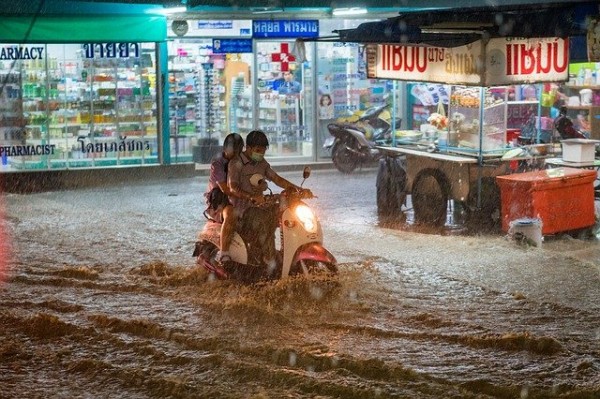
In Southeast Asia, where I lived for 2 years, they live in constant rain. Some areas in the highlands get over 100 inches a year – that’s 10 feet! For 4 months out of the year, it rains every single night – no pitter-patters here, I’m talking torrential downpours. Rain is not just a part of life; rain is life.
The houses there aren’t built to keep nature out. They’re made of wood or bamboo. When bugs get in the house, it’s fine. They consider their dwellings a part of nature.
In America, our houses are fortresses to keep nature out. They’re made of materials we’ve tightly, expertly constructed. Bugs are pests to keep out. Our space, our belongings, our privacy, are to be shielded from the outside elements.
In Southeast Asia, people dress in material and colors that blend in with nature. A shirt I bought once was dyed with red berries, and I had to wash it by hand because the dye would bleed onto the other clothes.
In America, our clothes are designed to keep the elements out. Just look at the names: UnderArmor. DriFit. StormFit. Nature is your adversary and you need to keep it out.
In Southeast Asia, your sustenance is at the beck and call of nature. Your once-a-year rice harvest determines how much you can eat that year. The produce changes with the seasons, and so do the prices. Rain swamps your market, and the parking lot for your motorbike becomes a mud field.
In America, food is fuel. The prices don’t change. You stock up. You buy things on sale.Your food is packaged, canned, microwaveable. Everything’s brand-name, quality-controlled, and lined up in nice, neat aisles.
In Southeast Asia, life sloshes along like the Mekong River. It’s dirty and uncomfortable, but you’re in an inner-tube and you have lots of time on your hands. Families never leave their homes, much less their hometowns. Rain is a chance to play.
In America, life comes out in measured bursts from a hotel bathroom faucet. It’s beautiful and sometimes a bit predictable. Your life is built around productivity – you wake up and you have to live on a schedule, on auto-pilot. You’re lucky if your family’s not scattered all around the country. Perhaps you’ll make time to call them on occasion, or at least see them at Christmas!
Our life in America is orderly, and the disruptive force is nature itself. When it rains, it screws with our timetable. It makes us have to repave our roads, replace our electronics. We’ve built our lives against nature. That’s why Hurricane Sandy was such a big inconvenience. It forced us not to work. It forced us to eat canned food, drink tap water, depend on our neighbors. As we watched people go back to the rubble that used to be their homes, it forced all of us to imagine a life with nothing.
That’s why we hate the rain.
It was a dark, overcast morning. It was my second month in Laos and I’m still learning how to say things. My neighbor teaches me this phrase: “It’s a nice day out.”
I answer: “No, it’s not. The weather is bad. It’s cloudy.”
She says: “Yes it is. It’s a nice day.”
I was really puzzled. “What do you mean?”
She states, matter-of-factly: “It’s a nice day because the rain cools things down. On a hot day, you have to stay inside to escape the heat. But today it’s gonna rain. It’s a nice day today.”
It reminded me of Bible times, or even in the pre-industrial age when America was an agricultural society. Back then, rain symbolized God’s blessing. When we were dependent on rainfall for survival, we weren’t too different from third-world Southeast Asia. We didn’t have much. All we needed was rain. When it rained, it was a good day.
Did you hear her, New York? New Jersey? Maryland? Connecticut? It’s overcast. It’s flooded. It just rained like a mother. Some of you have lost everything.
And your third world neighbor who lives a life filled with constant rain, just told you: “It’s a nice day.”
Yes, you’ve got pieces of your life to pick up. You’ve got homes to rebuild and you even have loved ones to mourn. Your civic leaders tell you that we’ve lost $60 billion in the last week. Mint.com tells you what your “net worth” is.
But as you look at the debris piled up and gape at the scale of devastation that can’t even fit your TV screen: don’t overlook what you’ve gained.
Because what Sandy and every other screwup in our lives reminds us is that: our life isn’t a machine created to run perfectly. Life is imperfect. Life is uncomfortable. Life is unpredictable. And the rain – and our former dry, comfortable, perfect life that it rained on – reminds us that we don’t know it all. It jars us awake in our delirious race to accumulate. It drives us out of our house so we can grab our loved ones and dance in it. The rain destroys, but it also makes things new again.
May you be blessed, according to how much rain’s fallen on you.
It’s raining.
It’s a nice day out today.
 Pastor Chris Choi is a graduate of Andrews Theological SDA Seminary. He has been a youth pastor of 3 Korean churches, and a missionary with the Adventist Frontier Missions in Laos.