
Truth is Never Wrong
Reprinted with permission
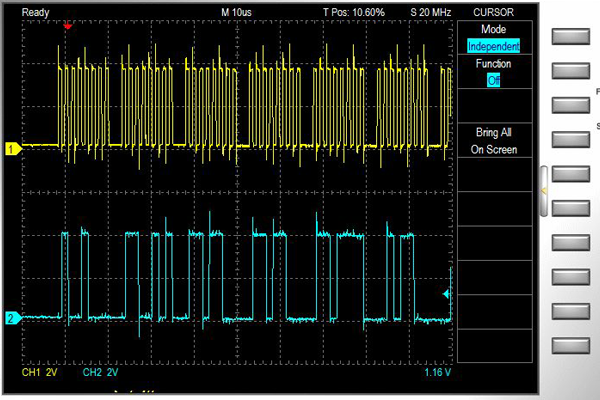
Around back in March, for work, I had to incorporate the capability for the satellite motherboard to be able to store data to the on board serial flash memory (SFM). The microcontroller did not have enough memory of its own, so some data that needed to be processed and stored, had to be serially written via what’s called the Serial Peripheral Interface (SPI) to the serial flash memory. The serial flash memory is a peripheral device that is external to the microcontroller, hence (the Serial Peripheral Interface).
Not to delve too much into the technical details, but I had to initialize the code on the microprocessor to be able to do this. From the manuals, I looked for all the proper initializations, and proceeded to write some routines to test out the ability to read and write data to the SFM. For the life of me, it would not work. I thought I was writing properly to the SFM, but I would never get anything read back out. No matter how much I tried different things, it would not work.
After many days, I became convinced that there was nothing wrong with what I did, but that the SFM chip must have been broken. It’s broken, I said confidently. Something is wrong with that chip, it had to be. I went to the Sr. Engineer and told him I tried everything and something’s wrong with the chip.
He came into the room to take a look and asked me what the clock speed of the microcontroller was. I didn’t even know why that was relevant, but I told him I didn’t know. He seemed kind of ticked, and told me I didn’t even check the clockspeed and I am sitting there telling him something is wrong with the chip. I felt rebuked. He went through some of my initializations, and went back to the manual, and looked at places I never even thought I should have looked at.
Based on the new information, I decided to have another stab at it. After many more days, I finally got it to write and read back something! It was a eureka moment, very exhilarating. I realized that the SFM was only behaving exactly the way I was telling it to. The chip wasn’t broken, it was just my fault for coding the routines the wrong way. Logic was just being logical. Machines are usually correct, whereas humans can make mistakes.
I noticed that when it comes to difficulties concerning the Bible, my approach to figuring it out is the same way. I will try to understand an esoteric, or controversial topic, but when I can’t seem to reconcile certain parts, I start to wonder if the Bible is incorrect or faulty in some way. After all, I have tried so hard! There’s no way that my analysis can be incorrect. It’s so hard to tell myself that I’m probably still wrong, that I’ve made a mistake somewhere, having put in so much effort already.
But truth is never wrong. If truth isn’t making sense to me, then it is I who am not understanding something, correctly. Maybe I am only focusing on certain parts of the Bible, like I only focused on certain parts of the manual. Maybe I should look even more diligently in other places to find the other missing pieces. The point is, when approaching the Bible, we need to understand that the Bible is truth. And therefore, the Bible is never wrong. So we have to keep trying until we get it right.
Happy studying!