
Two Weeks in Bolivia
“Let’s go to Bolivia!” Those were the words that my wife Elisa and I spoke to each other as soon as we heard Dr. Do Sung Kim give his personal testimony at the Riverside Korean SDA Church. It was January 26, 2013, and Dr. Kim had come to our church with his wife and three boys to visit family, but before the worship service even got underway, someone asked him if he would be willing to give the message. Dr. Kim decided to share his testimony about how God led him and his family to serve as long-term missionaries in Bolivia. His message struck a chord with my wife and me, and we felt called to help support the ministry in Bolivia.
Dr. Do Sung Kim is a dentist, who graduated from the Loma Linda University School of Dentistry in 1988. He went on to establish a very successful practice in central California and enjoyed the fruits of being at the top of his field. However, with increasing success, he felt a decreasing need for God. One evening, as he was piloting his plane with his whole family on board, the plane malfunctioned and started losing altitude. They crash-landed in an orchard, and miraculously, everyone survived unharmed. Dr. Kim realized that God had saved him and his family for a reason, and this led to a spiritual revival in his life. A short time later, he made the decision to move with his family to Montana so that they could live a simpler life. A series of divine appointments then led Dr. Kim to feel the call to serve as a long-term missionary in Bolivia, so he ended up selling all that he had and moved with his family to what is still considered to be poorest country in South America. Once there, God enabled Dr. Kim to purchase a piece of property on which he started an institute for training medical missionaries called the Instituto Quebrada Leon.
The fact that I was a 4th year medical student and Elisa was a dentist, made it natural for us to seek a chance to do medical mission work together, and Dr. Kim’s institute was just the opportunity that we had been looking for. It was nestled in the rural outskirts of Santa Cruz and served the poor, working class community that had limited access to healthcare. As far as worthy causes were concerned, it was hard to imagine a country with greater need than Bolivia. And most importantly, the ministry effort in Bolivia was one that my wife and I could believe in. We made the decision to spend two weeks there right after my board exam in July, and we committed ourselves by purchasing flights. As the date drew closer, one of our friends from church, Shawn Jin, decided to join us. He was a nurse, and we were happy to have him come along because we knew that his skills would be much needed.
On the evening of July 15, the three of us landed in Santa Cruz and began our experience in Bolivia. We had no idea what to expect, but we were excited and eager to make a difference in whatever way we could. Dr. Kim met us at the airport and greeted each of us with a warm embrace. We loaded our luggage and equipment into his Land Cruiser, squeezed ourselves into the spaces that remained, and drove off into the night. It turned out that getting to the Instituto Quebrada Leon was in and of itself an adventure. Getting there involved turning off the paved road, navigating large ditches that would strand most cars, and traversing no fewer than seven rivers. To add to the excitement, there came a point when a Jeep pulled us over. Two men in uniform, carrying assault rifles stepped out and began to question Dr. Kim about why he was out driving in the country so late at night. They asked for our passports and conducted a cursory inspection of our luggage. Apparently they were looking for drug traffickers, and when they were convinced that we posed no threat, they let us go. It was a memorable way to be welcomed to Bolivia.
After we situated ourselves at the Instituto Quebrada Leon, we learned that we would be traveling to a different rural village every day to provide medical and dental care. We met with a local physician who was to be our guide and liaison to the city government. A handful of volunteers from the institute were to accompany us each day to represent the ministry and to act as our interpreters. Because there were only three of us, we were concerned about how many patients we would be able to see each day, but in the end we decided that we would simply do our best and see as many people as we could without worrying about the numbers.
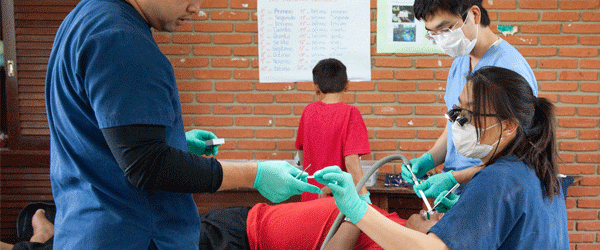
On our first day of work, our main goal was to get organized and develop efficient systems that would enable us to see as many patients as possible. The dental equipment took the longest time to set up, and all hands were employed to help assemble the delivery unit, lay out various tools, and prepare bins filled with sterilizing solution. Because Elisa could see only one patient at a time for restorative dental work, she trained Shawn and me to do basic cleanings. The line of patients waiting for dental work went out the door and filled the lawn outside. A great number of patients showed up for the medical clinic as well, and Shawn spent his time running back and forth between the two clinics recording patient vitals for me and serving as a dental assistant for Elisa. Despite our delay in providing healthcare, the locals patiently waited for hours to be seen and were very grateful for whatever help we could give them.
The majority of the patients that we saw suffered from lifestyle-related issues that were a unique combination of first- and third-world problems. On the one hand, many of them had poor personal hygiene and lived in very unsanitary conditions, and so they presented severe periodontal disease and parasitic infections. On the other hand, American fast food was readily available to even rural Bolivian villagers, and because Coca-Cola was cheaper than water at the grocery store, it was not uncommon to meet people who drank more than two liters of Coke a day. As a result, many patients presented uncontrolled diabetes, obesity, and hypertension. Because we lacked medications (which would have only been a temporary fix)--we focused on counseling patients on changing their lifestyle habits and we instructed them on the use of natural remedies. Luckily for us, the institute had sent a volunteer who was an expert on natural remedies, so we made sure that all our patients talked to her, after they finished with us.
As the days went by, we quickly learned that providing medical and dental care to rural villages in Bolivia posed some interesting challenges. For one, many of the townspeople did not speak Spanish, but rather, a local ancestral language known as Quechua. This language pre-dates the Incan empire and is spoken by indigenous people in many South American countries. When dealing with these patients, we needed someone to interpret the patient’s words from Quechua into Spanish, and then from Spanish into English. Needless to say, this made it very time consuming to obtain a patient’s history. Another problem that we ran into was the lack of basic resources. Some locations had no electricity so we had to haul a generator to power the compressor for our dental delivery unit. Regardless of the limitations, however, we learned to make the most of what we had, and it was amazing how God enabled us to treat the number of patients that we did despite our challenges.
In addition to medical and dental care, we made it a point to provide spiritual care whenever possible. After every patient visit, we offered to have a word of prayer with them, and because a great number of Bolivians are Catholics, they readily accepted. We also attempted to use our influence as American doctors to point our patients to Christ. I remember seeing a 17-year old girl in clinic who had recently been to the hospital. They gave her a sheet of paper documenting her diagnosis and told her that she needed surgery, but she wanted a second opinion from an American doctor so she came to our clinic. After looking over the paper that she handed me, it became clear that this girl was suffering from a hiatal hernia and decreased lower esophageal sphincter tone. What that meant was that she was constantly refluxing acid from her stomach into her esophagus, and the many years of constant exposure to acid reflux had caused her to develop a pre-cancerous condition called Barrett’s esophagus. I gently explained to the girl and her mother that for a case like hers, surgery was the only definitive therapy. When she heard the news, both she and her mother began to cry. I was a little surprised by their reaction because the surgery required to cure her was a low-risk procedure that had a high success rate. The interpreter looked at me sadly and explained that surgeons in Bolivia were known to be butchers and that many people who went in for even simple elective procedures often came out with serious complications. I turned to the girl and her mother and held their hands in mine. I empathized with their concerns, but I explained to them that because Barrett’s esophagus had a high risk of turning into cancer if left untreated, they needed to find the best surgeon possible in Santa Cruz. And then I told them that, in the end, the best thing we could do was to pray and ask God for guidance. They tearfully agreed and we all gathered in circle while our interpreter led out in prayer. The girl and the mother thanked us and left the clinic. I never found out what they decided to do, but I pray that by coming to our clinic they were encouraged to look to God for help in times of need.
At the end of our two weeks in Bolivia, the city of El Torno invited us to come down for an official recognition ceremony. Other medical mission groups had worked with the Instituto Quebrada Leon in the past, but we were apparently the first group to do so with the local government’s knowledge and backing. Shawn, Elisa, and I were given framed certificates acknowledging our service, and everyone on the team, including the volunteers from the institute, were given pins depicting El Torno’s official seal. Although the three of us felt that the recognition we received was disproportionate to the work that we did, we were very pleased because as a result of this event, the city government and the Instituto Quebrada Leon formed a working relationship that would set a precedent for other projects to come.
Looking back, the most rewarding aspect of this mission trip for me was being able to witness firsthand just how effectively medicine opens doors for ministry. The only reason why the local government in Bolivia was so eager to help organize our visits to different villages was because we were meeting a crucial need of the people. The Ministry of Healing p. 143 says “Christ's method alone will give true success in reaching the people. The Saviour mingled with men as one who desired their good. He showed His sympathy for them, ministered to their needs, and won their confidence. Then He bade them, ‘Follow Me.’” Before we can effectively point people to Christ, we must first win their confidence by showing that we care for them, and this is best done by ministering to their needs. In this sense, medical ministry work is truly the right arm of the gospel, and everyone can participate in it regardless of background. I pray that God will move on more people’s hearts to continue the healing and teaching ministry of Christ, and I pray that by doing so, He will raise up an army of medical missionaries who will take the gospel to the ends of the earth.
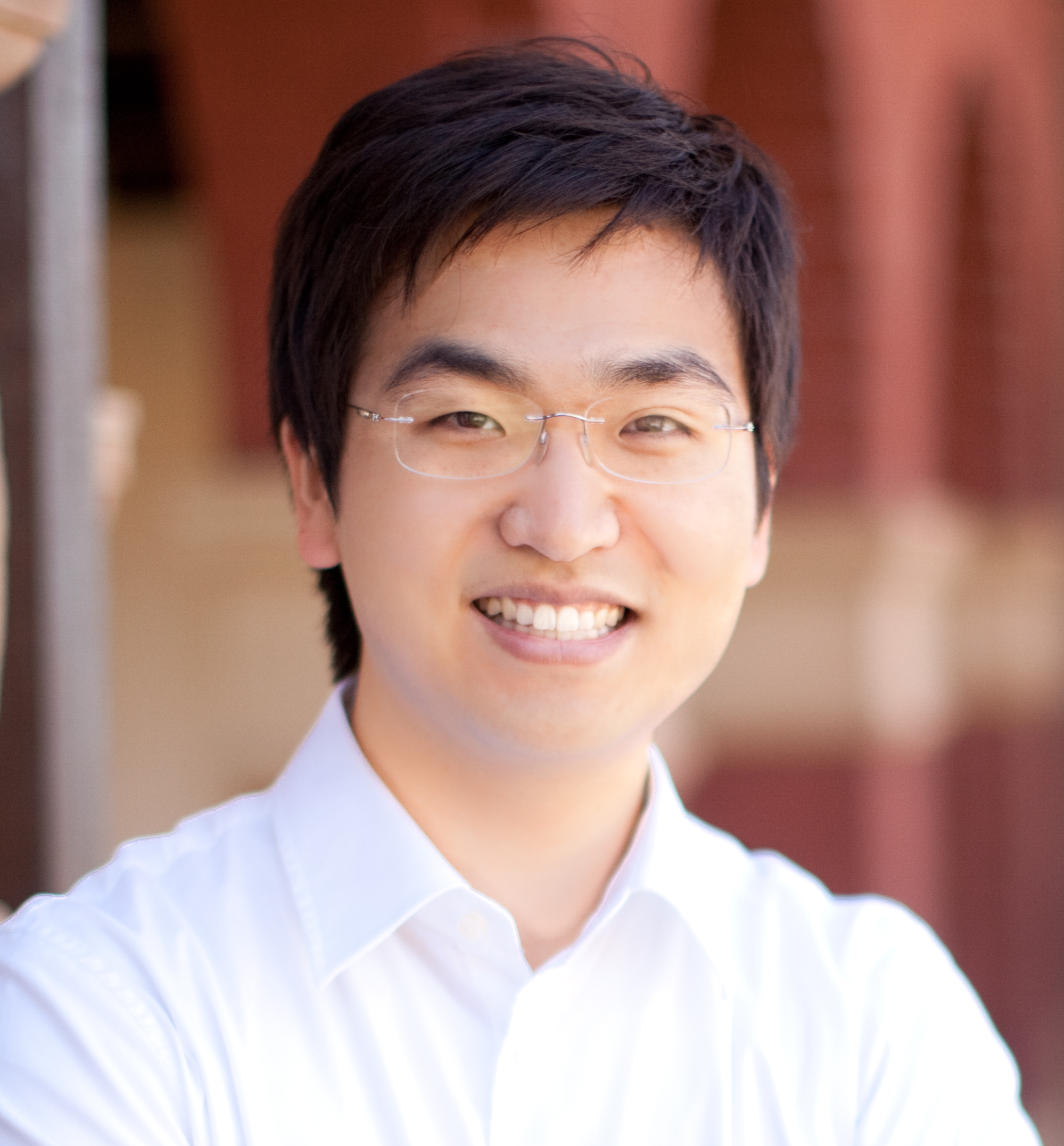 John is a fourth year medical student at the Loma Linda University School of Medicine. He currently serves as the chaplain for the School of Medicine Senate and president of the Adventist Medical Evangelism Network (AMEN) Student Chapter at Loma Linda. John is passionate about using his future career to reach people for Christ. He is happily married to Elisa Shin.