
We Believe in One God?
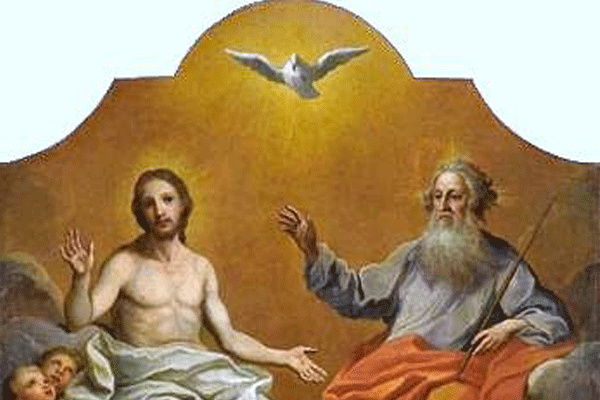
previously published in August 2004
Today, the Adventist church, along with the rest of the Christian world, officially teaches that the Scriptures portray to us a single God that is triune in nature. But that wasn’t always the case.
We learn early on with basic arithmetic that 1+1+1=3. However, when it comes to the Christian teaching of the Trinity, ordinary logic no longer seems to apply—1+1+1=1! We claim to worship one God, and yet believe in the Father, the Son, and the Holy Spirit. To some people, aside from being a logical contradiction, the doctrine of the Trinity is a form of polytheism, the worship of more than one god. However, despite objections and controversy, since almost the inception of Christianity, the Trinity has been and continues to be affirmed as a central and orthodox doctrine.
Why is this teaching so important? In this article we will briefly discuss the importance of this doctrine, the teaching of the Trinity in the Adventist Church, and lastly some practical ways to think about and explain this abstract concept.
What’s the Big Deal?
The doctrine of the Trinity is fundamentally important for at least two reasons. First is the issue of worship. In the Old Testament, in contrast to the polytheistic nations that surrounded it, is commanded to worship and serve one God. “Hear, O Israel: The Lordour God, the Lordis one. Love the Lordyour God with all your heart and with all your soul and with all your strength” (Deuteronomy 6:4-6). Only God is worthy of worship, because He alone is the Creator. The line between creature and creator is the line that distinguishes the one who worships and the one who is worshiped.
However, with the first advent of Christ, the application of this simple tenet became more complicated. In the gospels, not only does Jesus teach and heal, but he actually receives worship and is addressed by the title “Lord,” a title previously used in the Old Testament for God alone. Today, in church, we pray, sing and worship Jesus. What is Jesus’ relationship with God? This is the question that early Christian theologians struggled with.
A view that was rejected as heretical is one proposed by a church leader named Arius. Arius taught that only God was eternal and, at one point, made Jesus. Jesus was hence, a creature that at one point in time did not exist. In teaching this, Arius believed he was defending the absolute uniqueness and transcendence of God. However, his views were eventually rejected as unorthodox. Today, religious groups that believe that Jesus was at one point created are called “Arians” after the first proponent of this view.
The main reason Arius’ views were rejected was because of the implications for salvation. This leads us to the second reason the doctrine of the Trinity is so important. One of Arius’ opponents put it this way, “The Word was made man in order that we might be made divine.” In order for humans to receive full salvation, participate in the divine nature, Jesus had to be fully God.
Similar controversies surrounded the identity of the Holy Spirit, and it was eventually recognized that the Scriptures affirmed the full divinity of the Holy Spirit. However, this left the relationship between the Father, Jesus, and the Holy Spirit unresolved. In thinking about them, one could make the error of tritheism—belief in three gods, or the error of thinking about God as one in reality but only perceived by humans as three distinct entities. The orthodox explanation of Trinity was formulated as one “essence” or “substance” that exists in three “persons.” Each of these “persons” are functionally different yet are equal. We will take the time to make the make this abstract definition more tangible. But before doing so, we will discuss the doctrine of the Trinity specifically in the Adventist denomination.
Adventism and Arianism
Interestingly, most of the early Adventist pioneers can be classified as "semi-Arian." Because of their high regard for Scripture and relative low regard for other sources, such as the historical creeds, our denominational pioneers were, in a certain sense, left to “reinvent the wheel.” Several of them, including James White, believed that Jesus had a beginning or at one point was created. However, they differed from pure Arianism, because Jesus although he was created, shared God’s nature. (The logical possibility of an uncreated being and a created one sharing the same nature is another topic.) Interestingly, it was the influence of Ellen White, along with the careful study of Scripture, that maintained the orthodox teaching on the Trinity in the denomination. (for example see pp. 530, 785 of The Desire of Ages)
Today, the Adventist church, along with the rest of the orthodox Christian world, officially teaches that the Scriptures portray to us a single God that is triune in nature.
Thinking and Explaining the Concept
So what are we to do with the cryptic definition of the Trinity as “one essence and three persons”? There are many creative ways people have tried to explain it. St. Patrick of Ireland is famously known to have used the three-leaf clover to illustrate the Trinity as one plant, with three petals. Another, helpful metaphor is water. Water can exist as ice, liquid, or steam but does not change in its chemical composition, H2O. One of my friends suggested this is an inadequate metaphor because water cannot exist in all three states at once. He suggested the analogy of an atom—composed of electrons, neutrons, and protons. However, for various reasons, this is not a perfect metaphor either.
Ultimately, the nature of God is a mystery to humans. It would be hubris to think that we could encapsulate God in a metaphors, words, or our finite minds. One thinker has put it this way “to comprehend is the range of man’s relation to the human, but to believe is man’s relation to the divine.” The Trinity is something that cannot but fully understood, but is to be grasped by faith.