
Comfort Food or Holy Comforter?
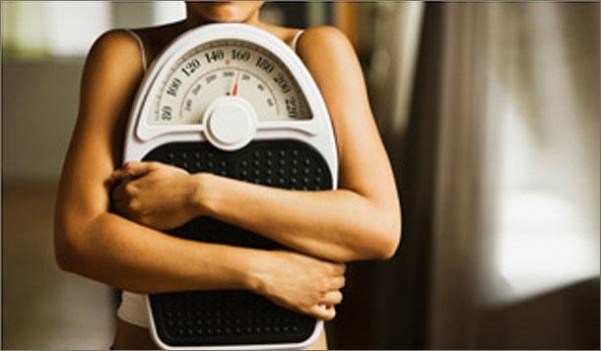
“It is easier to change a man's religion than to change his diet.” Diet is such a personal matter. Your diet can tell a story about you: what brought the family to the table growing up, your culture, maybe even a little bit about your personality. Do you mix your bibimbap, or eat it in pieces? Do you eat your dukbokki mild, or hot? Jjajang bap, or jjajang myun? Not only that, it can reflect your feelings. The image of a sad individual eating a tub of ice cream is often used as a comical scene, and it’s funny because you know it’s a real feeling. Have you ever found yourself overeating? Chips, chocolate, fruit… it really doesn’t matter what it is. How about eating too quickly? Have you ever paid attention to how you were feeling at that moment? While most people aren’t consciously thinking, “I’m eating fast because I’m anxious,” their body is responding to a real (and apparently important!) feeling. Although our behaviors may be reacting to a feeling, sometimes we ourselves are not consciously aware of it. It’s very normal that diet and emotions are linked: of course you’ll eat better when you’re feeling happier, but when diet becomes the primary outlet of expressing internal root problems, eating disorders can potentially be developed.
In the spectrum of diet, eating disorders can be a form of a deeper, more emotional issue. Anorexia nervosa, probably the most well known eating disorder (ED), stems from self-perceptions of unworthiness: “I’m not good enough,” “I’m not worthy,” “I don’t deserve…” Whether it’s people, opportunities, food, gratification, people suffering with this ED often have difficulty understanding or accepting circumstances. Oftentimes people suffering with Anorexia cope with feelings of unworthiness by seeking thinness and equating it to self worth and the ability to take control of their own life.
Bulimia is a little different in that there is an ability to comprehend circumstances, but may not be able to maintain them. This may be reflected in jobs, concentrating, relationships, and food. The stem of Bulimia is guilt and shame, and the need to get rid of these feelings. This may lead to impulsive decisions to self-harm. In terms of food, this is mostly expressed through vomiting or even excessive exercise (Exercise Bulimia).
Compulsive overeating (COE) is probably the most socially accepted and least recognized disorder. This is the ED that makes it difficult to stop eating. On occasion, it’s socially accepted; however, COE stems from a feeling of emptiness or inner void. This can be a lack of love, recognition, care, or understanding. Caretakers and people pleasers may be vulnerable to this side of the spectrum if their emotions are directed to food. Unlike Anorexia, instead of finding difficulty saying yes, there is difficulty in saying no to people, opportunities, and food.
Most people may not have any one of these eating disorders listed above, but remember that eating disorders fall under a spectrum. We can still use the knowledge of the extremes to help us become aware of our own emotions and reactions (or restrictions) to food. There were many times when I thought I was handling things okay, but then I would catch myself eating my meals quickly. The disconnection in my conscious state and my behavior made me stop and think: is there anything I’m worrying about? Anything that’s making me feel anxious? Food can easily become the comforter for unknown or known burdens, anxieties, stress, or feelings of unworthiness, guilt, shame, pride, the pressure of self-justification (expressed through restrictions, exercise, or purging), emptiness, and eternal loneliness. Isn’t that why we call it comfort food?
But Jesus promised to send us the Holy Comforter after He ascends to Heaven, and we live in that day today! “And I will pray the Father, and he shall give you another Comforter, that he may abide with you for ever.” John 14:16. Fortunately, our God not only rushes to comfort us, but to give us the “well of water, springing up into eternal life.” John 4:14. It helps to pay attention to how you feel when you eat because it could possibly tell you of a need that you’re trying to fill. Jesus is knocking at the door of your heart, possibly even a door to the closet of your heart. Bring your burdens and cast them at the feet of the One who cares, the only One who can truly restore our souls.
I used to be fairly athletic in high school, but as my activity level fell, my appetite remained the same. I ate however much I was used to eating, and sometimes more, not even thinking about my health because honestly, I never really had to think about it. I wasn’t consciously thinking that I was missing something, but I was trying to fill that emotion with food. Ultimately I found myself gaining a lot of weight. I was pretty disappointed in myself, and didn’t like what I saw in the mirror. Oh, I hated that feeling of emptiness, unhappiness, and disappointment toward myself. That’s a terrible feeling. Praise God the story doesn’t end there. With honest prayer and by studying the bible for myself, I started to discover the gospel in a personal way. I even saw Christ in my studies at school. It was a slow process, but by constantly clinging to the Truth about who I was, Satan’s lies didn’t look so convincing anymore. At one point I never would have thought I could be where I am today in terms of how I see myself. I share this because eating disorders are an unspoken, and statistically underreported struggle amongst Asian Americans. Yes, even Korean-American Adventists.
There is so much more to understand about eating disorders, but I want to encourage self-reflection for anyone who might be experiencing irregular, disorderly, or unnatural patterns of eating. Your behaviors might give away some insight as to the burdens you may have, and the restoration your heart longs for. It’s true that you may be eating in a different way, without the inner baggage. But for anyone who is dealing with emotions through the outlet of food, I do want to encourage honest with yourself and with the God who redeems and restores our identity. I assure you, Jesus is the answer.
Note: If you would like more information or support regarding this topic, visit [url=http://www.nationaleatingdisorers.org]http://www.nationaleatingdisorers.org[/url]. Also, consider speaking with your doctor or enrolling in a program that will support you through the processes. You can also see a Registered Dietitian who specializes in eating disorders..
 Tatiana Kim is a graduate student at Loma Linda University, getting a MS in Nutrition and Dietetics; and is originally from New Jersey.